Export Growth
January 6, 2026
How Venezuela figures into the aluminum sector
Written by Greg Wittbecker
The Trump administration’s military operations in Venezuela has included discussions on taking over the country’s oil sector. Venezuela has the world’s largest reserves of crude oil. The administration has emphasized the potential role of US oil companies in any future redevelopment of Venezuela’s reserves.
Against that backdrop, it’s worth revisiting another commodity of Venezuela’s and its history in the global supply landscape — aluminum.
Venezuela in the late 1980s and 1990s was the center of attention in the aluminum industry. Major producers such as Alcoa, Alumax, Alcan, and Pechiney did extensive due diligence into building major smelters in the country. Venezuela checked all the boxes:
- Ample hydro-electric power
- Domestic bauxite and alumina plus proximity to alumina from adjacent Jamaica and Surinam
- Deepwater port facilities to facilitate imports of raw materials and the export of metal.
None of these projects ever came to fruition because of the challenges of dealing with the government and the Corporation Venezolana De Guayana (CVG), the state-run investment arm charged with the key strategic industries.
Corruption was also problematic, and companies engaged in commercial activities experienced significant problems with contract execution. There was evidence the smelters had sold some of their production two or three times over in frantic efforts to raise working capital to keep the assets operational.
Good bauxite reserves
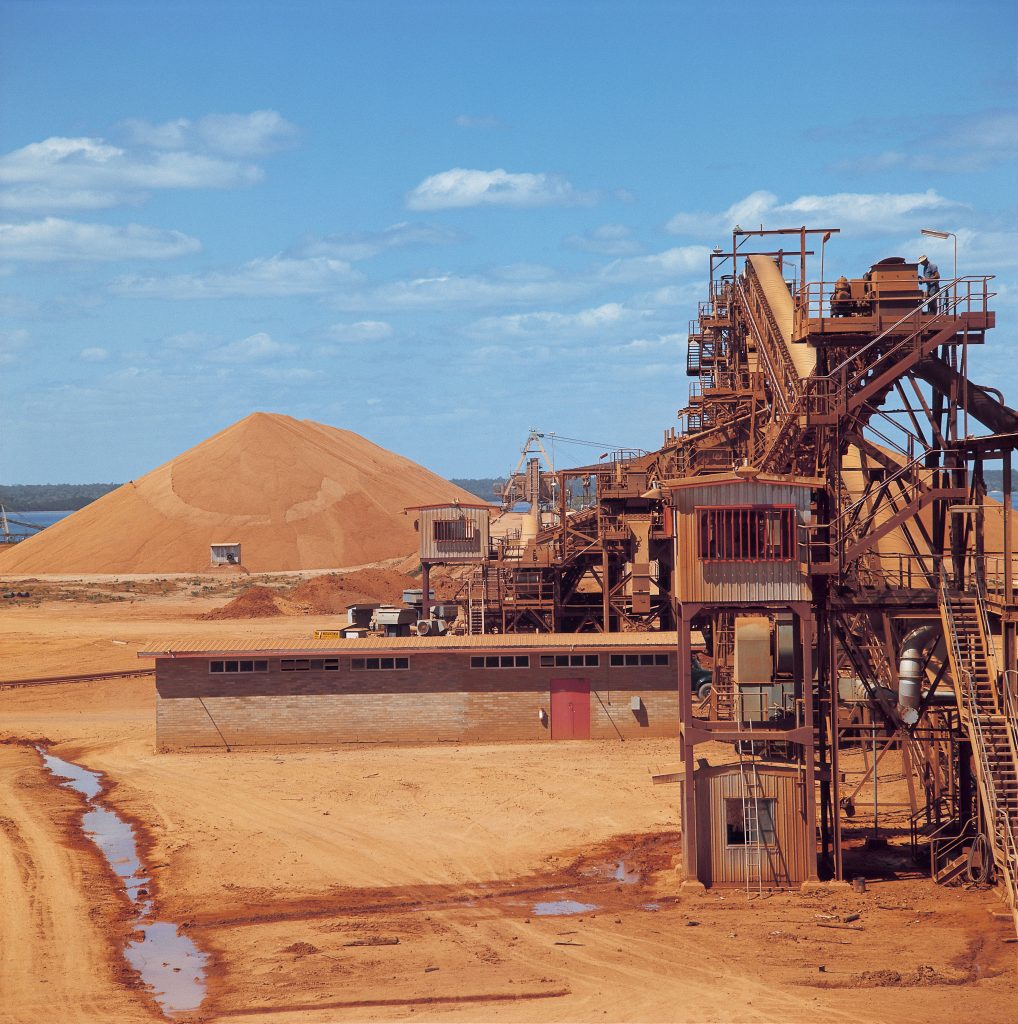
Venezuela has proven bauxite reserves of over 580 million-670 million metric tons, according to Roskill Information Services (now part of Wood Mackenzie). On paper, Venezuela could be capable of mining upwards of 6,000,000 metric tons per year.
The presence of bauxite in the country led to the creation of a joint venture between Alusuisse, Billiton (now South32) and the state investment arm CVG to build a 1,000,000 metric ton/year alumina refinery. The refinery was built in Ciudad Guayana/Puerto Ordaz, located on the Orinoco River, 250 miles inland from the Atlantic. The river is fully navigable and provided for the loading of Panamax class bulk carriers. The plant was inaugurated in 1983 as CVG Bauxilum.
The refinery was expanded to 2,000,000 metric tons/year capacity in the 1990s. This was designed to support the expansion of the adjacent aluminum smelters, Alcasa and Venalum.
Two aluminum smelters in serious disrepair
Aluminio Del Caroni or ALCASA, was built in 1967 as a joint venture between Reynolds Metals and CVG. The partners had big ambitions to creep the smelter, as it was operating at a modest 90,000 metric tons/year in 1979. Plans never materialized as the plant experienced a series of major excursions that crippled production.
Venalum opened in 1978 as a joint venture between CVG and a consortium of Japanese companies (Showa Denko, Sumitomo, Mitsubishi, and Kobe Steel) which held a minority share of 20%. The first 70,000 metric ton/year potline was inaugurated and three additional lines brought production to 280,000 metric tons/year by 1981. Subsequent expansions brought capacity to 430,000 tons by 2009.
Both smelters have suffered from chronic lack of sustaining capital. An internal management report produced in January 2014 and reported by local newspaper El Universal stated only 262 cells of the installed 905 were operating at Venalum. By 2015, Venalum production had crashed to 110,000 tons.
The most serious blow to both smelters came in March 2019, when a nationwide power outage caused the freezing of the remaining pots. Alcasa permanently closed and Venalum managed to recover over time but remains producing at only around 100,000 tons/year.
The potential remains high
Notwithstanding the major problems of the past, Venezuela has to be considered a viable candidate for recovery on the world market. The attributes which attracted world class producers to Venezuela 30-40 years ago remain:
- They still have abundant hydro resources to be tapped.
- The bauxite is still there.
- Port facilities are intact.
- Strategically located to service North American and European demand
Realistically, a lot of capital would be needed to make Venezuela a competitive world-class player:
- Electrical infrastructure is needed to harness the hydro potential.
- The refinery would require massive remediation, and, in that climate, wholesale reconstruction might be needed.
- The Alcasa smelter is not worth restoring as it was Soderberg technology.
- Venalum is in such a sad state of disrepair that a total rebuild might be called for.