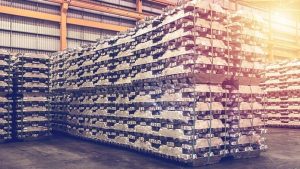
Arconic doubles high-purity output at Davenport
Arconic's Davenport expansion has doubled its high-purity aluminum capacity, a development that fills part of the void left by Century's idled Hawesville smelter and an opaque import market.


Arconic's Davenport expansion has doubled its high-purity aluminum capacity, a development that fills part of the void left by Century's idled Hawesville smelter and an opaque import market.

The long-delayed Concord facility marks Ball's return to the Carolinas and highlights a broader shift in beverage can demand, with energy drinks and specialty drinks driving growth as supply chains and consumer preferences evolve in tandem.

As billet upcharges mount, scrap spreads stay wide, and talk of an export ban rattles recyclers, the aluminum industry heads into 2026 facing some of the toughest cost and supply negotiations yet.

Novelis' Oswego mill fire has sidelined the largest producer of automotive body and structural sheet in North America, disrupting a closed-loop scrap system and removing over half of regional BIW/closures sheet supply, with limited options for domestic backfill and costly import alternatives.

Honda's Ohio Resource Circularity Center marks the first automaker-led EOL vehicle recycling facility in the U.S., contrasting with EU initiatives driven by rules to discourage zorba and twitch in favor of alloy-specific recovery.

Canada's new Strategic Response Fund for tariff-hit industries has triggered sharp criticism, drawing in questions over subsidies, trade imbalances, and whether U.S. and Canadian aluminum markets are as different as an industry group suggets.
Section 232's recurring inclusions, layered alongside overlapping and contested tariff regimes, have turned aluminum trade policy into a rolling mechanism that boosts GDP on paper, stokes inflation in practice, and leaves buyers navigating uncertainty as the only constant.

An in-depth look at how solar installations shape aluminum demand and U.S. market dynamics amid growing domestic capacity and the rising panel imports in the run-up to tariffs.
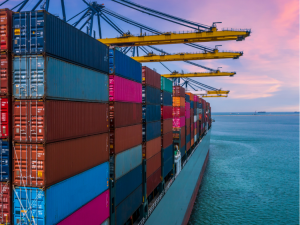
Upcoming USTR port fees targeting Chinese-built vessels are set to upend transpacific shipping costs, squeeze capacity, and ripple through U.S. supply chains as early as 2026.

Weakening truck and trailer orders, freight volume declines, and newly expanded Section 232 tariffs on aluminum derivatives signal mounting pressure on margins and investment decisions across the commercial vehicle sector.