Global Trade
February 20, 2026
New 10% tariff goes into effect after SCOTUS rules IEEPA usage illegal
Written by Stephanie Ritenbaugh
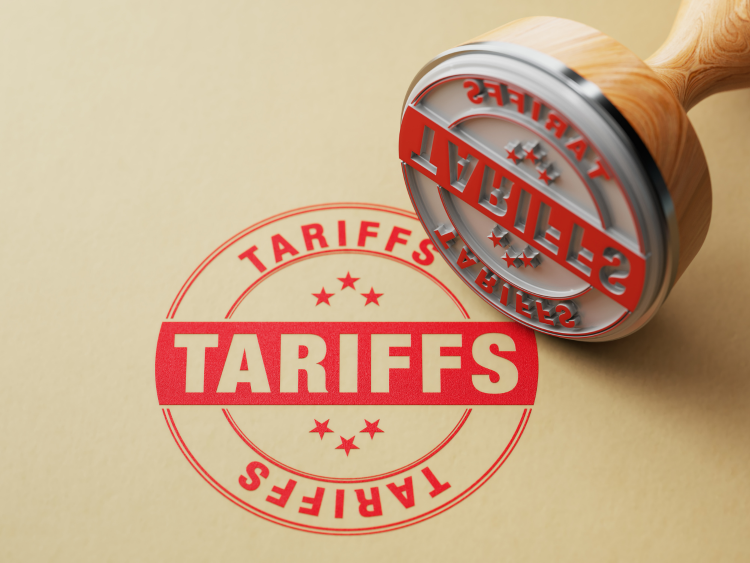
The US began collecting a new 10% global tariff on Tuesday under a new statute, days after the US Supreme Court struck down President Trump’s use of sweeping duties under the International Emergency Economic Powers Act (IEEPA).
During a Friday press conference following the high court’s decision, Trump said he will impose a 10% global tariff under Section 122 which allows a president to impose duties up to 150 days on countries “to deal with large and serious United States balance-of-payments deficits.” Over the weekend, Trump on social media threatened to raise the amount to 15%, the maximum allowed under the statute. But no further action was taken to raise the rate.
With the IEEPA tariffs struck down, the administration said it would also leverage import duties under the statutes already familiar with the metals community, Section 232 and 301.
The order specifies that goods that fall under Section 232 addition are not subject to the new 10% levy. Other exempt goods include those that are USMCA-compliant goods of Canada and Mexico and textiles and apparel articles that enter duty-free as a good of Costa Rica, the Dominican Republic, El Salvador, Guatemala, Honduras, or Nicaragua under the Dominican Republic-Central America Free Trade Agreement.
Emergency tariffs unconstitutional
On Friday, the Supreme Court said Trump overstepped his authority by ordering import taxes on nearly every country using the emergency law from the 1970s. It was a 6-3 vote.
“Recognizing the taxing power’s unique importance, and having just fought a revolution motivated in large part by ‘taxation without representation,’ the Framers gave Congress ‘alone…access to the pockets of the people.’”
“The Government thus concedes, as it must, that the president enjoys no inherent authority to impose tariffs during peacetime.’”
Using IEEPA, Trump imposed a 25% duty on most Canadian and Mexican imports and a 10% duty on most Chinese imports, claiming those countries were trafficking drugs into the US.
The so-called “reciprocal” tariffs were imposed on trading partners of at least 10%, with dozens of nations facing higher rates. Since imposing each set of tariffs, the administration issued several increases, reductions, and other modifications.
Seeking compensation?
The 170-page court document leaves a big question unanswered — whether companies who paid the levies, and US citizens they may have passed them on to — will get a refund.
The duties netted about $142 billion in 2025, according to recent estimates from US Customs and Border Protection.
Asked if he would refund the money, Trump said, “I guess it has to get litigated for the next two years,” he said. “So they write this terrible, defective decision, totally defective. It’s almost like not written by smart people. And what they do? They don’t even talk about that.”
Asked if he would fight the refunds, Trump said, “We’ll end up being in court for the next five years.”
The case will now return to the Court of International Trade, which will have to decide the appropriate remedy, including whether and how refunds should be processed, according to a briefing from the law firm Sandler, Travis & Rosenberg, P.A..
Edward Meir, a commodities analyst and contributor to AMU, said using the other statutes would be a check on Trump’s authority, “so he can’t just run roughshod as he’s been doing.”
“The world trade system depends on a degree of predictability,” Meir continued. “Just changing tariffs willy-nilly like this, it interferes with general trade flows, with investment decisions, with long-term planning.
“I’m not saying that this new system is going to be better, but at least people know there is a cap on tariffs, or that they are in place for only a certain period of time, or what have you.”