Aluminum Scrap Markets
March 16, 2026
Novelis award highlights broader challenge of recycling automotive aluminum back into sheet
Written by Nicholas Bell
Novelis’ recent recognition at the Münchner Management Kolloquium with the Award of Excellence highlights a development in automotive aluminum recycling: sheet produced using scrap recovered entirely from end-of-life vehicles.
The award recognizes the finished product, but the technology behind it reflects a series of agreements and pilot programs that have gradually assembled a recycling chain capable of returning end-of-life vehicle scrap back into sheet production rather than casting alloys.
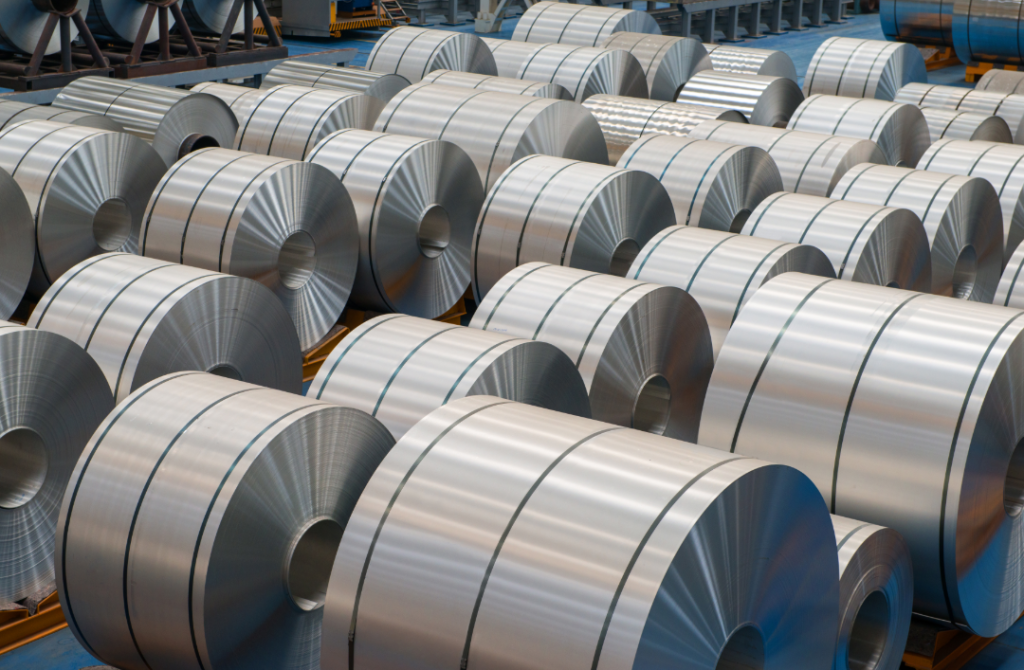
The material produced through this system is not a generic secondary aluminum alloy intended for casting applications. Instead, Novelis says the recovered metal can be rolled back into automotive aluminum sheet used for exterior body panels.
Novelis demonstrated that capability in a March 2025 announcement in which it produced an aluminum coil made entirely from end-of-life vehicle scrap that met the requirements for car body skin applications. A key part of the supply chain supporting this process is Novelis’ partnership with European recycling company TSR. In 2024, the two companies signed a three-year agreement under which TSR would supply roughly 75,000 tonnes of pre-sorted aluminum derived from end-of-life products.
The effort extends a model Novelis already uses for production scrap. Automotive sheet producers commonly operated closed-loop recycling systems that return stamping scrap generated during vehicle manufacturing back into sheet production. Those loops preserve alloy chemistry because the scrap originates from the same alloys used in the rolling mill.
Audi has tested such systems through its MaterialLoop program, which dismantled vehicles and separated materials including aluminum, steel, glass and plastics to evaluate how they could return to manufacturing. That project also included TSR Group as a partner.
Mercedes-Benz pursued a similar approach through its “urban mining” pilot project, which also involved TSR. Stellantis has also partnered with European recycling companies such as Galloo to recover materials from scrapped vehicles and prepare them for reuse.
Elsewhere, automotive OEM initiatives concentrate on dismantling reusable components or separating plastics and other materials before shredding, while others focus on recovering aluminum suitable for industrial recycling.
Although these programs differ in scope, they all address the same challenge: preparing scrap streams that are sufficiently sorted to allow aluminum to return to higher-value applications.
Within that chain, vehicle dismantling operations recover materials, scrap processors upgrade and sort the metal, and rolling mills convert the recycled aluminum into sheet products used in vehicle manufacturing.
Possible avenues for North American adoption
One place where many of these programs do not differ is their location. The projects described are tied to European recycling infrastructure and supply chains.
The TSR partnership feeds material into Novelis’ operations in Europe and the other OEM-led initiatives and programs come from Eurocentric automotive assemblers.
However, Detroit-based Ford Motor Co. has participated in studies and academic research examining aluminum alloy use and potential recycling pathways over the past decade, and the company operates a closed-loop recycling system with Novelis.
That involvement reflects the scale of Ford’s aluminum consumption and the potential value of recovering automotive aluminum scrap.
According to CRU Group’s 2026 Automotive Materials Market Outlook, Ford’s North American demand for automotive flat-rolled aluminum used in body-in-white and closure components is roughly three times that of the next largest automaker, General Motors. The same analysis indicates that Ford’s estimated 2025 consumption of flat-rolled aluminum for those applications exceeds the combined demand of nearly every automaker operating in the region — General Motors Group, Toyota Group, Honda Group, Stellantis, Hyundai Group, Volkswagen Group, Rivian Automotive, and others.
The only OEM excluded from that combined figure is Tesla. The company’s vehicles contain unusually high aluminum content per vehicle, which can distort comparisons of overall flat-rolled aluminum demand. If included, Ford alone would consume as much 80% of the flat rolled automotive aluminum for body-in-white and closures of every North American assembler.
Tesla is not a larger buyer of flat-rolled aluminum in aggregate than Ford or General Motors because its vehicle architectures rely heavily on cast components rather than sheet. CRU’s outlook indicates Tesla accounts for a castings and forgings body-in-white and closure aluminum demand nearly nine times larger than any single identifiable automaker in North America.
General Motors also ranks toward the upper end of automakers in flat-rolled aluminum demand due to its emphasis on midsize vehicles and full-size pickup trucks and sport utility vehicles, segments that remain prominent in the US market.
Even so, recent initiatives among US-based automakers have often focused on emerging material supply chains such as electric vehicle battery materials and rare earth partnerships, while collaborations aimed at recovering aluminum from end-of-life vehicles have largely developed among European automakers and recycles.
A large part of European initiatives reflects regulatory requirements in Europe. European Union end-of-life vehicles rules include extended producer responsibility (EPR) provisions, restrictions on exporting end-of-life vehicles, and new measures such as digital product passports intended to track materials through the recycling chain.
Why closed-loop automotive sheet recycling remains difficult
Although aluminum is widely recognized as one of the most recyclable industrial metals, returning automotive aluminum back into high-grade body sheet has been more complex than the headline recycling rates suggest.
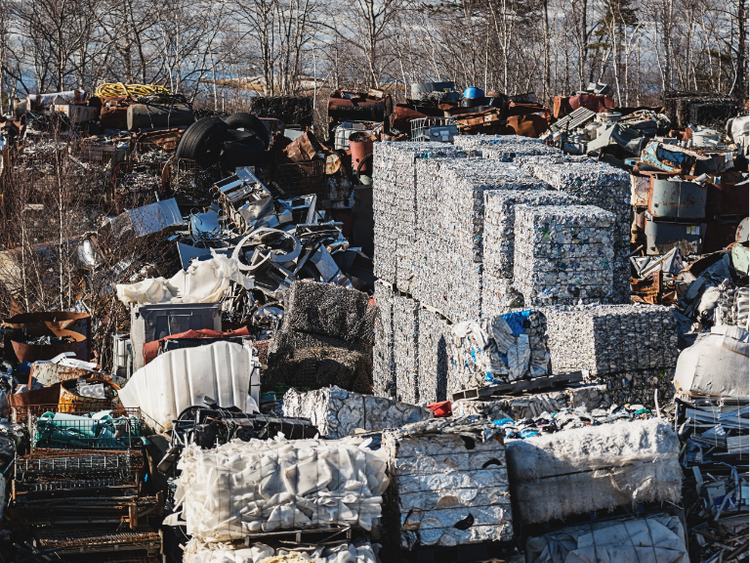
When vehicles reach the end of their life cycle, dismantlers remove fluids and reusable components before the remaining structure is shredded.
Magnetic, air, and eddy-current separation then divide the material into ferrous and non-ferrous streams.
The non-ferrous fraction, commonly referred to as zorba, typically contains 65% aluminum, and frequently above 90% aluminum when marketed to overseas buyers and auto-shred processors. Further processing can produce higher-purity aluminum scrap streams such as twitch containing roughly 90%-98% aluminum alloy.
Even after separation, however, the chemistry of these scrap streams poses a major barrier to producing new automotive body sheet.
Additionally, automotive body sheet typically relies on 6XXX series aluminum alloys for exterior panels and structural applications because they provide strength and formability after heat treatment. Other components use 5XXX series alloys that contain higher magnesium levels and offer different mechanical properties.
The dilution required to meet sheet alloy specifications can be substantial. One analysis estimated that lowering silicon content from a typically mixed scrap composition of about 5.1% to the ≤0.2% limit required for certain automotive sheet alloys would require dilution with roughly 25 kilograms of pure aluminum for every kilogram of scrap, according to research published in the journal Resources, Conservation & Recycling.
Because of these constraints, most post-consumer automotive aluminum is not returned to sheet production. Instead, recyclers commonly downcycle the material into secondary casting alloys used in applications such as engine blocks, transmission housings and other components with broader alloy tolerances.
Aluminum sheet influx
The difficulty of recycling automotive aluminum back into sheet form is becoming more consequential as the aluminum content of vehicles continues to rise.
According to CRU Automotive Materials Market data, the tonnage of flat-rolled products required for use in light-duty vehicles, post-yield, will grow by 28% by 2030 from 2025 figures.
One of the most visible examples of aluminum-intensive design was the shift to aluminum-bodied pickup trucks beginning with the 2015 model year of the Ford F-150. Subsequent models including Ford Super Duty trucks and full-size SUVs expanded the use of aluminum automotive body sheet across high-volume vehicle platforms.
As these vehicles age, they are expected to generate a substantial new scrap stream of aluminum body sheet. Modelling of vehicle lifespans and fleet turnover suggests scrap from aluminum-intensive vehicles could reach about 125,000 metric tons per year by 2035, according to research published in Resources, Conservation & Recycling.
At that scale, end-of-life vehicle sheet scrap could represent a meaningful portion of the automotive sheet market. One estimate said aluminum automotive body sheet recovered from scrapped vehicles could equal roughly 40% of sheet demand by 2035, according to research published in Resources, Conservation & Recycling, rising further as aluminum-intensive vehicles make up a larger share of the fleet.
However, realizing that opportunity will depend on improved sorting, alloy separation and vehicle design practices that preserve scrap chemistry during recycling.
Delineating closed-loop reuse
Automotive aluminum recycling rates are already relatively high by global material standards. One study examining the US recycling value chain estimated about 91% of automotive aluminum is ultimately recovered and reused in some form, according to a Worcester Polytechnic Institute study.
However, the high overall recycling rate does not necessarily translate into closed-loop reuse of the same applications. Much of the aluminum recovered from end-of-life vehicles enters mixed scrap streams and is used to produce secondary casting alloys rather than wrought sheet products.
The tonnage of castings and forgings required for use in light-duty vehicle production in North America is also projected to increase over the next several years. These estimates refer to aluminum use across the entire vehicle rather than only body-in-white and closure components.
CRU estimates sheet use in regional vehicle output will grow by about 28%, while castings and forgings are expected to increase by roughly half that rate over the five years following 2025, at around 14%.
Even so, the outright tonnage of castings and forgings required remains about 100,000 metric tons higher than the additional sheet demand because cast components make up the largest share of aluminum weight in vehicles.
This distinction reflects the compositional constraints associated with many wrought aluminum alloys used in body sheet and structural components. As a result, since castings and forgings represent a larger share of aluminum weight in North American vehicles, much of the automotive scrap stream continues to move into cast products rather than sheet.
What Novelis award signals
Within that context, Novelis’ award reflects more than a single recycled product.
Producing automotive body sheet entirely from end-of-life vehicle scrap suggests that a supply chain capable of delivering sufficiently sorted aluminum feedstock can operated at industrial scale.
Whether similar systems develop in North American will depend on scrap processing infrastructure, vehicle dismantling practices and the ability to maintain alloy separation across recycling chain.
In Europe, several of these initiatives have been supported by regulatory frameworks governing end-of-life vehicles.
In the US, progress may also depend on material engineering approaches. Several academic studies involving automakers such as Ford have examined whether components can be designed within the same alloy families, which could reduce the need for extensive alloy separation during recycling.
For aluminum market participants, the issue extends beyond recycling rates. The question is whether a growing stream of automotive aluminum scrap can return to sheet production rather than continuing to flow primarily into casting alloys
Scrap suitable for rolling mill feedstock generally carries higher value than mixed auto shred fractions such as twitch, and it returns to flat-rolled production rather than being remelted by secondary smelters into casting alloys.
A shift in that direction could affect both sides of the market, tightening scrap supply available to secondary smelters while expanding feedstock availability for rolling mills.