Global Trade
March 16, 2026
ALBA smelter curtails lines amid Iran war
Written by Greg Wittbecker
Aluminum Bahrain (ALBA) announced the controlled curtailment of its Lines 1, 2 and 3, which collectively produced 300,000 metric tons/year.
There had been speculation last week ALBA may curtail Line 1 due to growing concern over alumina supply. This line, along with Line 2, are ALBA’s oldest (circa 1971) and least efficient of their six lines. The logic was being the oldest and least efficient, ALBA might be willing to curtail them to conserve the remaining alumina in their more modern lines which date from 1992 to 2018.
Now Line 3, built in 1982, is also being curtailed. These three lines would have been consuming about 1,595 metric tons of alumina per day, so an orderly shutdown would help stretch their remaining inventory.
A controlled curtailment is a process where the molten metal is tapped out of the pots. Lines 1 and 2 contain 228 pots or cells. Line 3 has 76 cells. ALBA should take around 14 days to drain the molten metal and gradually reduce the amperage flowing through the bus bar to the three lines. In the next three to five weeks, the remaining bath in the pots is allowed to solidify and may been removed.
What comes next
ALBA, like its neighbor in Qatar, remains the most vulnerable of the aluminum smelters operating in the Persian Gulf because they have no internal alumina production. Maaden, its Saudi neighbor, is backwardly integrated and produces 100% of its alumina requirements on site. EGA in the United Arab Emirates, is about 50% self-sufficient thanks to its Al Taweelah refinery. Sohar, in Oman, is south of the Strait of Hormuz, on the Gulf of Oman and should be able to be resupplied with its alumina.
ALBA’s remaining alumina requirement for Lines 4-6 is about 2.5 million metric tons/year, or about 208,000 metric tons per month, requiring about 3.5 Supramax bulk carriers. That’s supply is not coming as the Strait of Hormuz is effectively closed.
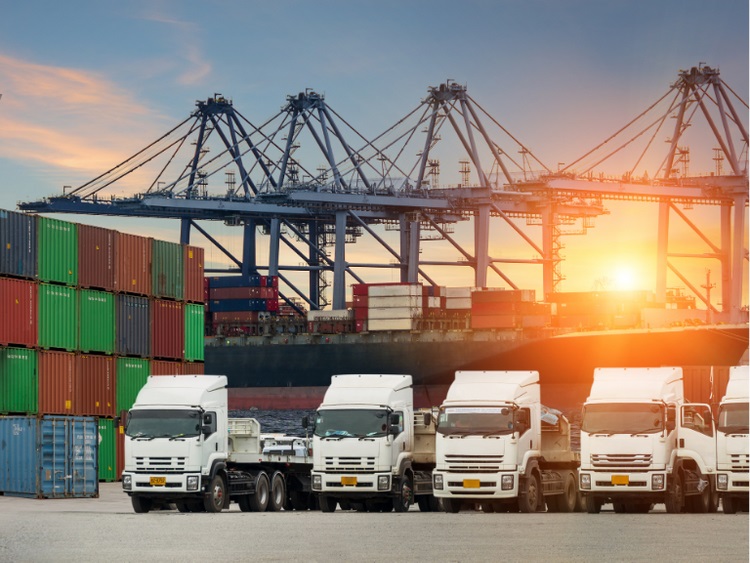
There has been some speculation ALBA, along with Qatar and even EGA might attempt to bring alumina in via truck, using “super sacks.” These super sacks have historically been very popular in China, but not in the World ex China, which has handled alumina in bulk. To put this into context, ALBA’s month’s requirement would require about 5,200 truckloads averaging 40 tons each. That would entail handling about 138-139,000 super sacks. A daunting task. This does not account for efforts by Qatar and EGA to do the same.
There are serious logistical challenges to make this work:
- Getting the Chinese alumina refineries who specialize in loading to super sacks to prepare a cargo and ship it to the Emirati port of Khor Fakkan or Omani port of Sohar. That would take 20-25 days.
- Discharging the super sacks and finding the trucks to move it to Bahrain. It is 600 miles from Kho Fakkan or Sohar to Bahrain. Transit times could be 10-12 hours.
We expect ALBA, along with Qatar and EGA are pulling out all the stops to try this move, as there is little reason to believe that transits through the Strait are going to happen anytime soon.
Why this matters
ALBA joins Qatar’s 40% curtailment of 260,000 tons, bringing cumulative curtailments to 560,000 tons. This may not be the end of painful decisions to idle more capacity if some stopgap supply chain can’t be cobbled together to get some alumina flowing back into the three impacted smelters. In the absence of some trickle of alumina supply coming through by land, we may see further curtailments announced in the next two or three weeks.
There is collateral damage coming from this as well. The Gulf smelters were the major outlet for the Australian alumina refineries. ALBA, EGA and Qatar collectively purchase about 6.8-7 million tons of alumina per year. That demand cannot be replaced.
Historically, China used to import that kind of volume. However, they are now self-sufficient and don’t need to import a pound. The refineries will be hard pressed to place spot cargoes of alumina, and that could spell trouble for the Alumina Price Index. Refineries can accumulate some production, but not a lot. We might see some modulation of production by Australian refineries if shipments do not resume within the next month.
These curtailments will roil the LME, and we should see the market testing new highs this week. Physical premiums may also be marked up, led by the duty unpaid markets in Rotterdam and CIF Japan.