Electrical
April 6, 2026
Middle East aluminum risk by product and company, Part 2: UAE/Bahrain
Written by Nicholas Bell
This is Part 2 of a product- and company-level breakdown of Middle East aluminum supply. Part 1 examined EGA and Alba. Part 3 examines Oman, Saudi Arabia and Qatar.
Over the last week, the initial focus of the Iran war impact has centered on Emirates Global Aluminium (EGA) and Aluminium Bahrain (Alba), those two producers do not account for the full scope of US import exposure tied to the United Arab Emirates (UAE) and Bahrain.
Beyond those facilities, both countries host additional producers that show up in more narrowly defined product categories. Those suppliers are often embedded within broader trade data but remain relevant in specific alloys and forms used in the US market.
Broader UAE and Bahrain supply base
Garmco
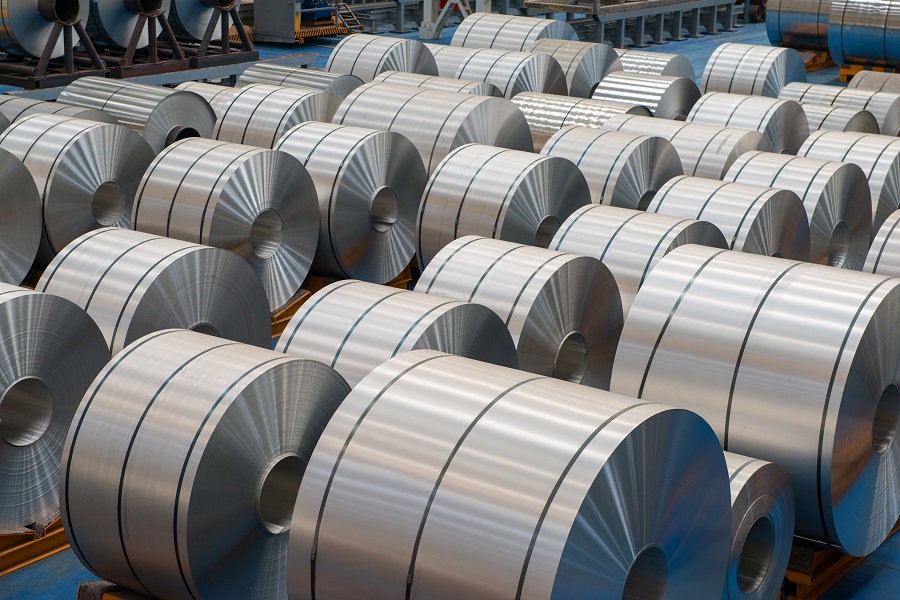
In Bahrain, one of the more relevant downstream suppliers is Gulf Aluminium Rolling Mill (GARMCO), which produces flat-rolled aluminum products. Garmco supplies common alloy sheet and coil, including 5052, 5005, and 3005, as well as 5754 for automotive applications and 3104 used in packaging.
Bahrain accounted for roughly 2.7% of total US imports of aluminum plate, sheet, and strip in 2025. When isolating the more relevant non-heat-treatable and general commercial categories, captured in Harmonized Tariff Schedule (HTS) subcategories under the “Aluminum alloy, plates/sheets/strips, w/thick. 0/0.2mm, rectangular (incl. sq), not clad” category — 35, 90, and 96 — that share rises to 5.9%.
At first glance, those figures suggest a marginal role. However, the structure of global supply narrows the field of realistic alternative.
Canada and South Korea rank as the leading suppliers in those subcategories. In South Korea’s case, a significant portion of flat-rolled production is tied to Novelis operations, including its Yeongju mill and its joint venture in Ulsan. That production is largely integrated into downstream supply chains, limiting its availability as a flexible export source.
Removing those two countries from the comparison shifts the picture. Among the remaining global suppliers, a small group of mills accounts for the balance of production. Based on CRU Group production output estimates, about 37% of South Korea’s common alloy and auto body sheet output sits outside those major integrated operations, spread across three remaining mills. That figure reflects total production, not export availability, and is distributed across multiple markets. (CRU Group is the parent company of AMU.)
Within that narrower pool of accessible supply, Bahrain’s share of US imports increases to 8.6%. Excluding additional Middle Eastern suppliers, namely Oman and Saudi Arabia, pushes that figure higher. Bahrain accounts for about 11% of US imports in those same subcategories.
The implication is not that Bahrain dominates flat-rolled supply, but that its role becomes more visible once structurally committed or regionally concentrated production is set aside. In a market where substitution depends on gauge, temper, and qualification, the number of practical alternatives is smaller than aggregate import data suggests.
Midal Cables
Another Bahrain-based supplier, Midal Cables, operates in a more narrowly defined segment, but remains important within it. The company supplies 1350 EC-grade wire rod and 8176 wire rod, both of which feed into the production of overhead transmission conductors, distribution lines, all-aluminum conductors, and building wire and cable.
Within aluminum wire, Bahrain’s role is more pronounced, accounting for around 19% of total imports in 2025. When isolating the more specific subcategory that covers aluminum wire rod — non-alloyed aluminum wire with a maximum cross-sectional dimension over 7mm — Bahrain accounted for a little more than 22% of US imports in 2025, indicating a significant portion of Bahrain’s shipments is concentrated in larger-diameter wire.
The concentration again becomes more apparent when removing Canada, the largest supplier. In that case, Bahrain’s share of imports in this subcategory rises to just over 53%, representing more than half of remaining import supply.
That level of exposure comes as demand for electrical infrastructure remains a focus, particularly alongside data center buildouts tied to artificial intelligence.
Tangentially, domestic wire rod supply provides limited flexibility. While Southwire produces wire rod in the US, that material is largely consumed internally for its own wire and cable operations, positioning it as a competitor rather than a merchant supplier to the broader market. That leaves a smaller pool of external suppliers, primarily Alubar and Alcoa.
Based on figures cited in filings with the Commerce Department, Alcoa’s US wire rod capacity has been estimated in the range of 25,000-35,000 metric tons per year prior to 2023. Against that baseline, Bahrain’s 2025 imports of 57,435 metric tons equate to roughly 2.3 times the lower end of that range and 1.6 times the upper end.
More recent filings indicate Alcoa began producing 1350 EC-grade wire rod at its Massena, NY, facility in late 2023, with stated capacity of 70,000 metric tons per year. Even at that higher capacity level, Bahrain’s import volume would represent about 82% of that output.
Broader market estimates highlight the discrepancy between capacity capabilities and actual throughput. CRU Group estimates US wire rod production at just over 30,000 metric tons per year as of early 2026, with little to no growth observed since 2024. That period coincides with Alcoa’s state ramp-up of production in Massena.
Even so, available data suggests stated capacity has not translated into a comparable increase in observable output.
North American supply remains anchored by Canadian production, which has also shown limited expansion over that period, according to CRU production estimates.
SAS Aluminium Foils
The UAE has a more limited presence in downstream semi-fabricated products. One exception is SAS Aluminium Foils, which produces ultra-thin converter foil, including gauges below 0.01 mm, typically in 1235 alloy.
These products fall under aluminum foil imports, of which the UAE accounted for 0.36% to the US in 2025.
However, that is a broad category defined primarily as foil not exceeding 0.2 mm in thickness of non-backed material. That definition is a far cry from the ultra-thin converter foil SAS produces, typically below 0.01 mm in 1235 alloy.
At that level of specificity, trade data cannot be further delineated. As a result, while this specialty product exists within the broader foil category, it is not possible to determine its precise share or relevance within US imports, particularly given that standard-gauge foil likely accounts for the majority of that trade.