Export Growth
March 2, 2026
Gulf aluminum exports at risk amid Iran escalation
Written by Greg Wittbecker
The US-Israeli attacks against Iran have obvious and significant geo-political implications. Their impact on the primary aluminum sector could be equally significant.
Regional production concentration
Countries adjoining the Arabian Gulf, referred to in Iran as the Persian Gulf, produce the largest concentration of primary aluminum in the world outside China, according to 2025 production data contained in CRU’s 2026 Aluminum Market Outlook:
- Bahrain: 1.62 million metric tons
- Oman: 0.40 million metric tons
- Qatar: 0.65 million metric tons
- Saudi Arabia: 0.83 million metric tons
- United Arab Emirates (UAE): 2.69 million metric tons
In aggregate, the region is expected to produce more than six million metric tons in 2026. That figure does not count Iran’s anticipated tonnages for 2026. Iranian metal is so heavily sanctioned that it trades among a limited group of nations, such as India and China.
Dependence on Gulf metal in EU and US markets
The Gulf region is a major supplier to both the EU and the US, in addition to serving its domestic markets and maintaining its traditional orientation toward North Asia.
In recent years, the five Gulf producers, excluding Iran, have been significant suppliers to the EU market. When 2025 data is released by Eurostat, shipments are expected to increase relative to 2024 as the EU continues to distance itself from Russian metal.
Total US aluminum imports from the five countries in 2025 were 860,522 metric tons. Data through February 2026, released March 1 via the Aluminum Import Monitor, shows 132,070 metric tons year to date, or an annualized run rate of 792,421 metric tons. Those exports have slowed, which is discussed in an accompanying article.
Hormuz as a critical export bottleneck
The Strait of Hormuz lies between Oman and the UAE on one side and Iran on the other. It connects the Arabian or Persian Gulf with the Gulf of Oman and the Arabian Sea.
At its narrowest point, it is 33 kilometres, or 21 miles, wide, with shipping lanes just 3 kilometres, or 2 miles, wide in either direction, making it vulnerable to disruption.
Iran has broadcast messages since the attacks began stating the strait is not open to commercial traffic. Most tanker and container fleet operators are exercising caution and are not attempting to navigate the strait. It remains unclear whether the US Navy will begin escorting vessels through the waterway.
Given its importance to oil and aluminum flows, such action would not be surprising. However, as of this writing, there is no confirmation.
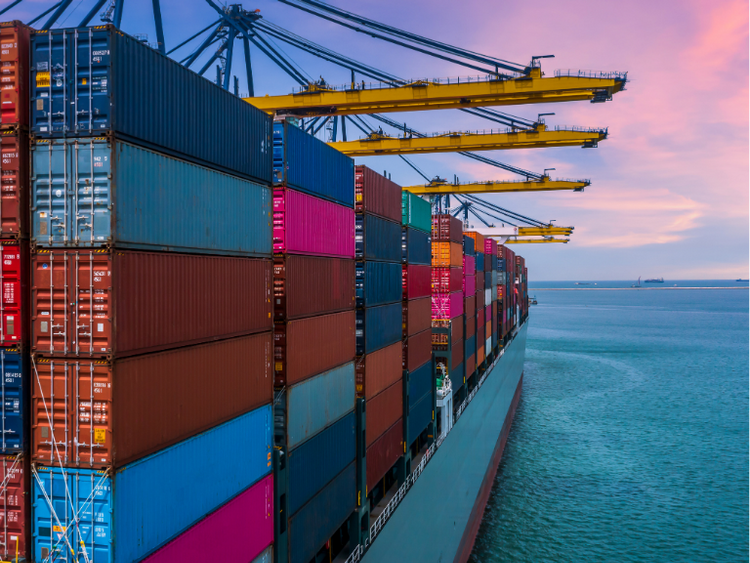
This presents a problem for aluminum producers, as they have no viable alternative routes to market. There is currently no high-volume rail network capable of moving metal to the Red Sea and onward through the Suez Canal or around the Cape of Good Hope.
While Saudi Arabia and the UAE have long-term ambitions to build a regional rail network, with Jeddah in Saudi Arabia serving as a Red Sea port, that vision remains unrealized.
If the strait closes, aluminum shipments would effectively be halted.
Why This Matters
The US physical market has already been operating on a razor’s edged, with Midwest premiums at $1.02 to $1.04 per pound and domestic stocks at historically low levels.
February imports were just 209,699 metric tons, compared with 258,443 metrics tons in January. Canadian imports totaled 121,988 metric tons versus 155,596 metric tons in January.
Imports had been expected to increase in response to rising US premiums and incentives for Canadian and seaborne suppliers.
A disruption to Middle East exports would tighten an already constrained market.
With US stocks estimated below 200,000 metric tons, or roughly two weeks of supply, the margin for error is minimal. Even a one- to two-week suspension of Middle East shipments would exacerbate tightness. The impact could be more pronounced in billet and foundry alloys, where the region plays a significant role.
Europe is unlikely to fare better. Given continued reluctance to trade with Russia, supplies of value-added products could also tighten.
Who could step in?
India’s Vedanta may benefit. The company is ramping up production of value-added products and is positioned to expand its presence in both the US and Europe.
However, doing so will require adjustment to logistics. Historically, shipments have relied on containerized cargo. A shift to break-bulk shipping, with vessels carrying 10,000 to 20,000 metric tons, would take time to execute.
Still, the situation presents a potential opportunity for Indian producers.