Global Trade

March 2, 2026
Week in review and thoughts for the upcoming week of March 2, 2026
Written by Edward Meir
It is not often that we find ourselves preparing a weekly report just as a war is breaking out. But such is the case this weekend. Talks between the US and Iran were making some progress last week. Apparently not enough, however, to persuade President Trump to continue them.
As a result, early on Saturday morning US East Coast time, US and Israeli forces launched a series of attacks on Iranian missile sites and residential complexes thought to be housing regime leaders. In one such strike, several senior commanders of Iran’s Revolutionary Guards and other political officials were killed. Hours later, it was confirmed that the Iranian Supreme Leader himself was among them.
Immediate impacts of the war with Iran
Interestingly, for the first time ever, the US made it clear that it is seeking to change the regime in Iran itself. But President Trump noted in his address that this will be up to the Iranian people to and will not be accomplished by US boots on the ground. We will see if that goal becomes a reality or if the regime lives to fight another day. In the meantime, the Iranians have been fighting back, launching missiles at various countries in the region housing US military bases and on Israel itself. This has only emboldened the Gulf Arab countries to vow reprisals of their own if the attacks continue. For the moment, all guns are blazing.
It is difficult to assess what could conceivably happen to various markets in the middle of a war, especially in such a key region. However, based on our experience of watching previous conflicts, we believe investors tend to have a rather dispassionate view of conflagrations as long as there is no potential impact on oil flows. Although some oil producers have voluntarily curbed shipments through the Gulf, they might resume them once things settle down. Even if the fighting drags on in the waters of the Gulf, the US Navy could also escort oil tankers out of the region as it did during the 1980–1989 Iran/Iraq war.
However, with much of the Iranian navy sunk, we may not see a repeat of 1980-style tanker escorts. Meanwhile, the Saudis are also taking steps to calm the markets down. They said over the weekend that they will try to persuade OPEC to increase production to 411,000 barrels/day at their meeting this weekend. That’s up from an earlier proposed increase of 137,000 barrels. As of this writing, we are still waiting for a decision.
We will see what happens to markets when trading resumes shortly in Asia. We suspect that most commodity complexes should open sharply higher. But recall that oil has already run up in the lead-up to the conflict (up by about $8/brl in the last 10 days). And so there could be an element of “buy the rumor, sell the news” type of reaction that could set in later on Monday. Outside of oil, there is quite a bit of aluminum that flows out of the Gulf. We would not be surprised to see ali prices open higher as well – pulling the rest of the metals up with it.
Last week in metals, equities, and treasuries
In reviewing last week’s developments, we had a mixed performance in base metals. Copper and nickel were each up by nearly 3% while aluminum finished about 1.2% higher. Zinc was the biggest loser, down by almost 2%, while lead ended just about flat. Tin was the standout on the upside, up a whopping 24% on the week. But there was no fresh news other than ongoing concern about tight supplies and a resumption of speculative trade flows after China’s markets re-opened last week.
Interestingly, copper and tin have seen significant price appreciation over the last two weeks despite the fact that their inventories have been growing significantly. In tin’s case, LME stocks stand at 7,550 tons, up by about 50% from the beginning of the year. Shanghai tin stocks are a little over 12,000 tons – a meaningful amount of holdings for tin. In copper’s case, exchange inventories held across Shanghai, the LME, and CME exchanges are now collectively well above 1 million tons. There is more than 500,000 tons of copper stored on US exchanges and about 400,000 tons in Shanghai warehouses – a 10 year high.
Precious metals had a solid week on an apparent resumption in retail buying and lingering concern that the recent Supreme Court tariff decision could ultimately weaken the dollar some more after its current rally fades. Gold was up by 3.3% last week, but silver and platinum outpaced it, each up by 12% and 10% respectively. Palladium was up by an impressive 5% on the week as well. Gold closed at just under $5,300/ounce on Friday. It will likely pop up by at least $100-$200/ounce (in our view) later tonight when Asia opens. We also could see silver breach the $100/ounce mark.
In the equity markets, US stocks finished lower in a volatile week with Friday’s inflation numbers not sitting well with investors (more on that later). The S&P 500 lost 0.4% on the week and slipped back below its 50-day moving average. The NASDAQ Composite and the Dow posted weekly losses of about 1% and 1.3%, respectively.
AI disruption concerns remain a negative theme. Software stocks in particular saw a sharp sell-off as investors grappled with automation concerns related to their existing business models. In the chip space, despite delivering a strong set of results, shares of Nvidia ended the week down by 6.7%. Financials were another area of notable weakness. Utilities, consumer staples, and health care names all did well, as did energy, benefitting from the strength in crude.
US treasuries finished February with strong gains across the curve that sent yields to their lowest levels of the year. The two-year note yield settled at 3.38% (down ten basis points on the week). The ten-year note yield settled down 13 basis points at 3.96%. Mortgage rates also dipped below the 6% mark for the first time in four years as well.
Macro readings and other news from the past week
• The latest US producer price inflation readings were not particularly encouraging. The January core increased by 0.8% (vs. last month’s 0.6% gain) and came in well ahead of the 0.3% consensus. The overall PPI came in at +0.5% versus the 0.3% expected and was also up from the prior reading of 0.4%. The year-over-year increase came in at 2.9% on the overall PPI rate (slightly better than last month’s 3% reading). But the annualized core rate came in significantly worse, at 3.6% y/y, up from 3.3% in the month before.
• Factory orders declined 0.7% m-o-m in December (consensus 0.9%) following a 2.7% increase in November. Excluding transportation, orders increased by 0.4% after rising 0.1% in November. The key takeaway is that weakness was concentrated in the transportation component. Otherwise, it was a fairly decent month for factory order activity.
• The December FHFA housing price index rose by 0.1% m/m (consensus 0.4%) from 0.6% in the prior month. The December S&P Case-Shiller home price index ended up by 1.4% y/y.
• February consumer confidence readings rose to 91.2 (consensus 86.0) from the prior revised reading of 89.0
• Weekly initial claims increased by 4,000 to 212,000. Continuing jobless claims for the week decreased by 31,000 to 1.833 million. Both reports continue to reflect a “low-firing, low-hiring” labor environment.
• The February Chicago PMI came in at 57.7, up from the prior reading of 54.
• November construction spending rose by 0.3% after dipping by 0.2% last month. Residential construction spending accounted for the entirety of the increase.
• Banks continue to raise their price projections on copper. UBS says it expects to see a $15,000/ton print over the next 13 months. It has global copper consumption up by 2.8% this year and sees the 2026 deficit widening to 520,000 tons, double last year’s levels. Citibank expects copper to hit $14,000/ton over the next three months. Goldman Sachs is the lone bear, expecting prices to fall to $12,200/ton by year end.
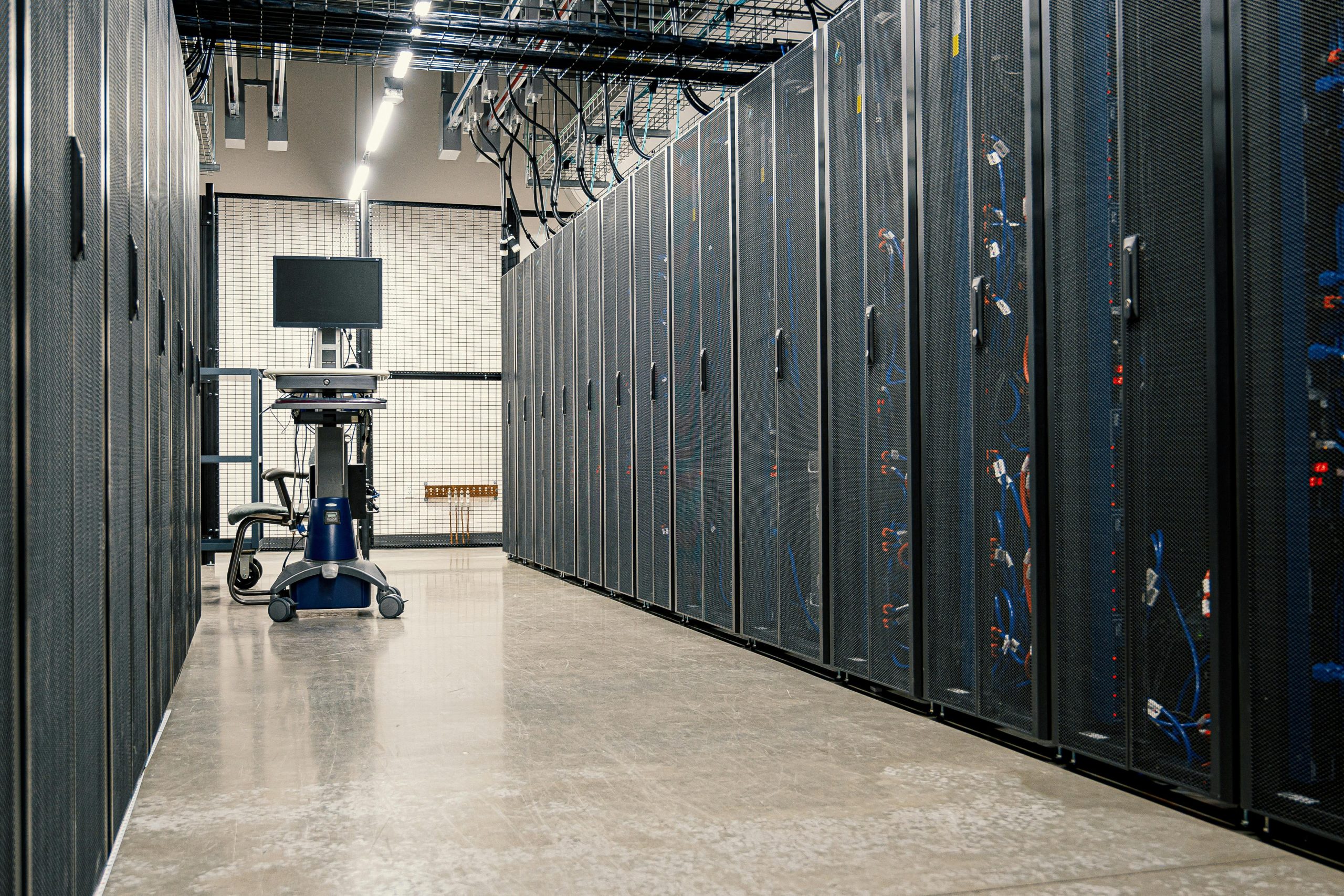
• In his State of the Union message on Tuesday, Trump defended his aggressive use of tariffs. He called a Supreme Court decision striking down his International Emergency Economics Powers Act (IEEPA) tariffs “unfortunate.” But he vowed to press on. In fact, Trump authorized the use of a 10% duty under Section 122 as the new prevailing rate. And he said an increase to 15% would follow. The president also said that technology companies must start relying on their own power to move their projects along. Why? Because existing grids are simply not geared up to accommodate extra demand. Details on how these self-starter programs would be implemented, regulated or enforced, were not forthcoming. Some data centers have in fact become self-sufficient. But these are a minority because many key components needed to self-energize – like gas turbines – have multiyear waiting lists.
• German Chancellor Merz, along with representatives of 30 German companies, were all in China last week and met with top Chinese leaders, including President Xi. Competition from China’s low-cost producers have devastated Germany’s economy. Chinese firms have now expanded their footprint in such key areas as cars and machine tools — traditionally the domain of German firms. Ernst & Young estimates that 120,000 German industrial jobs were lost last year. Meanwhile, China’s economic prowess is being increasingly acknowledged, with the CEO of Volkswagen China telling Reuters that “Few places move as fast in areas such as electromobility, software, artificial intelligence, and battery technology — China is setting the pace and shaping standards.” This indeed is the problem the West is facing as it seeks to take on the Chinese trade behemoth. The genie is out of the bottle and hard to put back in, let alone control.
• US Trade Representative Jamieson Greer said the US and Canada will be launching a new round of trade talks in the next few weeks. Greer noted that the Canadians “have a few ideas on how they might want to have a deal with us. We’re obviously open to that.”
• Reuters reports that Alcoa is looking to sell ten of its closed sites to data centers, with the first sale set to be completed by the end of June. Earlier in February, Century Aluminum said it sold its idled Hawesville smelting site to a data center. Neither development is a particularly auspicious start in the campaign designed to revive US aluminum production.
This week’s US macro readings
On Monday, we get the February ISM manufacturing reading (expected at 52%, last 52.6%) and February auto sales later in the day. Nothing comes out Tuesday. But on Wednesday, we get the February ADP employment report (expected at 50,000, last 22,000) followed by ISM services (expected at 53.5%, last 53.8%). Wednesday brings us weekly initial claims (expected at 215,000, last 212,000) along with Q4 productivity readings (expected at 1.8%, last 4.9%). Finally, on Friday, we get the non-farm payroll report for February (expected at 54,000, down from the surprisingly high reading of 130,000 from the month prior).
We wish all our readers all the best for the upcoming week.