• Skip to main content

    Pulse

    Edward Meir's Week in review and thoughts for the week of April 6, 2026

    Written by Edward Meir


    We had a very eventful week in the various markets, as investors sifted through changing headlines with respect to the war in Iran.

    Early in the week, US equities and most commodity markets started to recover and crude oil prices began to moderate as investors were reassured by President Trump’s remarks that US military operations could wrap up even if the Strait of Hormuz was not fully opened. Investors were keen to hear more details from Trump’s speech Wednesday night — his first formal TV address since the conflict began. The president stated the conflict was nearing an end, but also vowed to hit Iran “extremely hard” if the country did not reach an agreement (power plants were mentioned as specific targets).

    Separately, Trump told American allies they would have to “take the lead” in reopening the Persian Gulf passageway, in effect leaving the status of the Strait — responsible for 20% of the world’s oil outflows — up in the air.

    The speech did not sit well with the markets. Asian equities sold off sharply going into Thursday’s session. European markets followed suit. US equity markets sold off significantly at the opening bell on Thursday but managed to pare losses by the close. For the week, all three indices ended with negligible changes. The most frenzied action occurred in the crude markets. WTI prices ended up by roughly $10/barrel on Thursday. Brent settled about $8/bbl higher. There were roughly 8%–10% weekly gains in both gasoline and diesel futures as well.

    The headlines turned even more ominous heading into the weekend. Two US planes were shot down on Friday, but the airmen were rescued, one of them just in the last 24 hours. Trump said Saturday he would “reign [sic] down hell” on Iran if it refuses to “make a deal or open up the Hormuz Strait in the next 48 hours.” That deadline is set for Tuesday and so we will see what the president has in mind as he is scheduled to talk sometime on Monday.

    We should note Trump backed off a similar threat he made two weeks ago (setting off a market rally in the process) but no one is sure what will happen this time around — and that could include the president himself. Meanwhile, we have to suspect there are feverish back-channel negotiations going on that could provide Trump a reason to postpone his strike. On the opposite side of the spectrum, social media is awash with rumors a strike on Iranian energy facilities could take place over the next few days.

    Precious and base metals

    Precious metals had a more restrained week. Gold and silver each ended up roughly 2% and down 2% respectively. In the base metal space, copper rose by 1.7. Lead was up by 2%. Zinc and aluminum had the strongest showings, up roughly 6% each. Tin was next, up by nearly 5% on the week. Nickel finished 1% lower. US steel prices ended the week on a firmer note.

    Aluminum

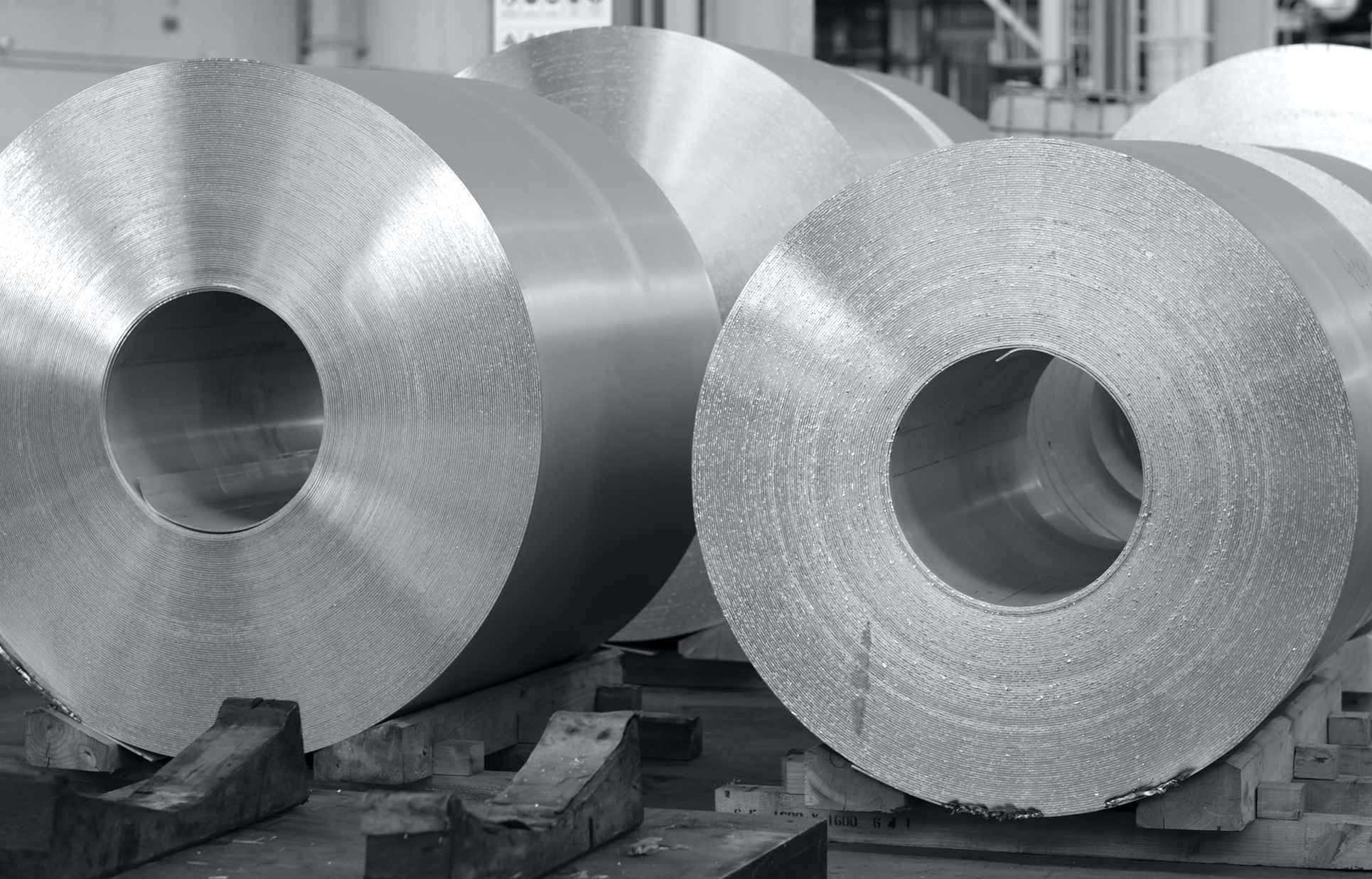
    Aluminum was very in the spotlight this past week on growing concern about damage inflicted on some of the Persian Gulf’s key smelters. Over the weekend, officials at EGA’s Al Taweelah smelter said that repairing the smelter might take up to 12 months. In addition, the massive Habshan onshore gas facility in the United Arab Emirates, which supplies 60% of the Emirate’s domestic power needs, sustained damage as well.

    We are still waiting for a formal assessment from Alba, Bahrain’s primary aluminum smelter. We know the facility is operating at only 30% capacity. Each smelter churned out about 1.6 million tons of metal last year, supplying roughly 5%–6% of global supply. “The [aluminum situation in the Gulf] has now clearly shifted from a temporary logistics squeeze to a direct and structural supply shock” one of our European sources wrote us over the weekend.

    It will be difficult to offer any kind of rational analysis on the markets going into the new week as we have no visibility as to when — and how — this conflict is going to end. What is more certain is should the Iranian regime stay in place, the geopolitics of the region will be changed forever and surely fraught with more tension. This in turn could translate into higher energy prices for a longer period of time as the Gulf becomes a more volatile supply source.

    One can argue that many other conflicts have erupted over the years, and most were ultimately ignored by the markets (if not by the politicians). This one is unique for the simple reason the massive amount of energy flowing — or not flowing — out of the Gulf could tip the global economy into a significant slowdown, if not an outright recession.

    Section 232

    There were important trade developments with regard to the Section 232 tariffs after the White House issued a proclamation Thursday altering the duties imposed on steel, aluminum and copper. Importers of “derivative” products made of steel, aluminum or copper will incur a flat 25% duty on the full value of the product, a departure from the previous method of collecting a 50% tariff on just the metal content. A reduced 15% tariff would apply for certain industrial and electrical grid equipment. Products made abroad, but which use American steel, aluminum and copper will be subject to a 10% tariff. Products using less than 15% of steel, aluminum or copper in their composition will not be subject to any tariffs.

    The CEO of the American Iron and Steel Institute said he “commends the decisive action taken today by President Trump to ensure that all steel mill products, including steel pipe and tube, receive the full benefit of …tariffs.” The Steel Manufacturers Association President expressed similar support, saying that while “domestic raw steel production increased under [the previous] tariffs, many steel-containing goods continued to be dumped into the US market, placing significant strain on American manufacturers. The robust derivatives process helped close these gaps, strengthening supply chains and supporting US manufacturing.”

    US aluminum producers were also happy. Century Aluminum said the new provisions will “close valuation loopholes that importers have been using to avoid the President’s tariffs on steel and aluminum by … in some instances [declaring] only the value of raw steel and aluminum while excluding value added through processing, thereby lowering the tariff owed and disadvantaging domestic manufacturers.”

    Others were not as upbeat about, with one Canadian manufacturer saying “paying 25% on the entire invoice value of finished items in the 400+ list of tariff codes considered derivative will increase tariffs paid by many, many multiples.”

    We are not sure how all this is going to play out, but it should make the work of customs brokers slightly easier. Our preliminary take is even though the nominal tariff rate will now be cut in half, the US importer or consumer could still end up paying more. We would agree with the Canadian manufacturer that derivative end-products made of steel, copper or aluminum will be worth more than the underlying commodity. And so, the net “cost” to the economy is going to be substantially higher, even in light of a 25% tariff reduction.

    Macro readings and other news from the past week

    • US job growth rebounded more than expected in March, with 178,000 jobs created. This was well ahead of the 58,000 jobs expected and also recouped all of February’s 133,000 decline. The unemployment rate fell to 4.3%, from 4.4%, mainly on account of a drop in the labor force participation rate. Apparently, 400,000 fewer people were looking for work last month. More than half the March jobs (90,000) created were in healthcare and social assistance, offsetting the nearly 20,000 job decline seen in the federal workforce. Leisure, hospitality and construction sector jobs increased by 44,000 on account of better weather. The construction industry added 26,000 jobs, while manufacturing employment rose by an encouraging 15,000. Despite the welcome increase in jobs, the economy generated only 15,000 positions per month in the past six months, a sizable decline from the 78,000 average posted a year ago.
    • ADP reported private payrolls increased by 62,000 in March after an upwardly revised 66,000 gain in February. (The consensus forecast for March was 40,000).
    • The ISM manufacturing reading edged up to 52.7 last month, the highest since August 2022 and the third consecutive month the number came in above 50. The ISM report is similar to manufacturing PMIs we have seen from other countries all showing that global factories have stepped up production, possibly in response to logistical issues, shortages or a desire to replenish inventories. However, we are seeing input prices rising across the board as well. In the case of the ISM, the prices-paid component accelerated to a four year high of 78.3, up from 70.5 in February. Meanwhile, the ISM’s forward-looking new orders sub-index dropped to 53.5 from 55.8, while growth in backlog orders slowed as well. Separately, the March Chicago PMI dropped to 52.8 from 57.7.
    • February retail sales (ex-auto) came in at 0.5% vs. the 0.3% consensus, an improvement over the unchanged reading seen in January. Overall sales rose by 0.6% (0.5% expected). However, the February numbers are somewhat stale in our view. Economists will be more interested in March data as that tracks the start of the war. Among the March numbers that have come in, we were reassured by the surprising month/month increase in consumer confidence readings. We would’ve thought confidence should have plunged last month. Still, there was a concerning jump in 12-month consumer inflation expectations, which reached its highest reading since August 2025.
    • In housing news, the January FHFA housing price index rose by a slight 0.1% m/m, while the January S&P Case-Shiller index increased by 1.6% y/y. The weekly MBA mortgage applications index fell by 10.4% — no surprise here, as mortgage rates pushed past 6.5% last week.
    • In trade news, the US customs agency said Tuesday it was making progress in setting up a system to begin processing $166 billion of trade refunds but said that it would need at least more six weeks before its claims portal is operative. The Court of International Trade ordered customs “to begin processing refunds using its existing system, but the agency instead proposed a new process that would be ready to accept refund applications as soon as next month and would not require importers to sue,” Reuters reports. About 27,000 “importers of record” had completed the process to receive electronic refunds, representing an amount totaling $120 billion.
    • In a speech Monday, Fed Chair Jerome Powell noted inflation expectations remain well anchored but emphasized the Fed’s tools have limited impact on supply shocks, such as the current one the markets are dealing with.
    • Out of China, new home prices edged up slightly in March, offsetting the decline seen in February. “Given weak employment conditions, elevated housing inventory and other fundamental challenges, overall market sentiment remains fragile,” the director of Asia-Pacific at Fitch Ratings was quoted as saying.
    • China’s factory activity grew at the fastest pace in about a year in March, with the official manufacturing PMI coming in at 50.4 from 49.0 in February. However, similar to the ISM, the sub-index for raw material input prices jumped to 63.9 from 54.8, driven by rising commodity prices. The non-manufacturing PMI, which includes services and construction, increased to 50.1 in March from 49.5 in February.
    • Over the weekend, fires broke out at the Borouge petrochemical plant in Abu Dhabi after an Iranian missile hit the facility. There were no reported injuries, but operations at the plant were suspended pending a damage assessment. A petrochemical facility was also hit in Bahrain, setting several operational units ablaze. The fires were extinguished and here too, there were no casualties.

    This week’s US macro readings

    It should be a fairly busy week on the macro front, with the main focus on key CPI inflation numbers for March that comes out later in the week.

    Monday, we get the March ISM services reading (expected at 55.4, last 56.1).

    Tuesday brings us durable goods orders (expected at -1%, last unchanged) along with February consumer credit (expected at $10 billion, last $8.1 billion).

    Wednesday, we get the Fed minutes from the last meeting.

    Thursday brings us personal income and spending numbers for February (expected at 0.3% and 0.5% respectively, last 0.4% on each) followed by the February PCE index (expected at 0.4%, last 0.3%). The year-over-year core PCE is expected to come in unchanged at 0.4%, while the year-over-year reading is expected at 2.8%, also unchanged from the previous month.

    Thursday brings us a second revision to Q4 GDP (expected at 0.4%, unchanged from the previous reading) as well as weekly jobless claims data (expected at 210,000, last 202,000).

    Friday brings us March CPI (expected at 1%, last 0.3%) while the year-over-year increase is expected to jump to 3.3% (from 2.4%). The core CPI, which strips out energy, is expected to increase to 0.3% (from 0.2%), while the year-over-year number should increase to 2.7% (from 2.5%). Finally, we get February factory orders on Friday (expected at 0.2%, last 0.1%), followed by April consumer sentiment readings (expected to decline to 52 from 55.5).

    Edward Meir

    Read more from Edward Meir

    Latest in Pulse