• Skip to main content

    Global Trade

    Alcoa navigates impacts of Iran war

    Written by Stephanie Ritenbaugh


    Aluminum producer Alcoa is navigating disruptions from the Iran war, which has curtailed Middle East smelter production.

    The Pittsburgh-based company reported Q1 2026 earnings of $425 million, down from $548 million a year earlier. Compared with the previous three months, Q1 2026 profit jumped to $425 million from $213 million in the fourth quarter as aluminum prices rose in recent months.

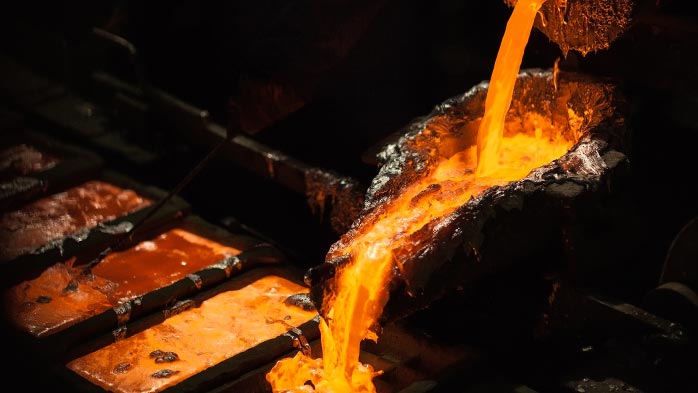
    Alcoa produced 607,000 metric tons of aluminum in Q1 2026, up from 564,000 metric tons in the prior-year period.

    Aluminum

    The war has also pushed prices on the London Metal Exchange (LME) and driven the Midwest premium upward as supply tightens.

    LME prices rose about 10% sequentially, recently crossing $3,600 per metric ton.

    “Announced curtailments have already tightened the 2026 balance, and any further disruption in the Middle East has the potential to constrain supply even more,” Oplinger said. Supply was already tight due to curtailments in Mozambique and disruptions in Iceland.

    “We expect global demand to grow sequentially this year, driven by ex-China markets, albeit at a slower pace than previously anticipated as the conflict poses downside risks,” he said.

    “However, given the scale of supply disruptions, softer demand will be outweighed by supply impacts in the market,” he added. “Underlying market conditions remain largely consistent, with packaging and electrical markets leading demand growth, while automotive and construction remain soft.”

    North America, European aluminum markets

    The company expects North America and Europe to remain in a “substantial deficit” due to their reliance on Middle East imports, particularly for billet, slab and foundry products.

    Alcoa expects to fill some gaps in the primary metal and value-added product markets and said it has seen an increase in customers reaching out for domestic supply.

    Alumina

    “Our alumina cost position provides resilience in a low-price environment, and we have insulated ourselves from spot energy volatility through long-term contracts and financial hedges,” President and CEO William Oplinger told analysts.

    Overall, the Middle East conflict has exacerbated margin pressure across global refineries. The region is the largest alumina-importing market, with shipments heavily dependent on the Strait of Hormuz, which remains effectively closed. That closure has also pushed energy and freight costs higher.

    About 8.8 million metric tons of alumina and 6 million metric tons of bauxite flow through the strait, Oplinger said. The region imports much of its bauxite. As a result of the conflict, more than 2.5 million metric tons of annual smelting capacity and nearly 2 million metric tons of refining capacity are offline year to date.

    Margin pressure on China has been more muted.

    “Higher domestic alumina prices, lower bauxite costs and stable coal pricing, largely unaffected by the conflict, have supported refinery margins,” Oplinger noted. “That said, we do expect costs to rise as the caustic market tightens and higher freight costs begin to flow through seaborne bauxite supply.”

    About 4 million metric tons of annual refining capacity has been curtailed in China. Cargoes meant for Middle East smelters are being rerouted to China. As more production enters the market from new refinery projects in coastal China and Indonesia, Alcoa expects the global alumina market to remain pressured through the first half of 2026.

    Increasing production

    Asked whether there is an opportunity to increase production, Oplinger said the company has been increasing smelting output at its Portland facility in Australia, in San Luis, Brazil, and in Lista, Norway.

    “That’s on the smelting side, but probably more importantly, what we’re seeing today is on the value-add side,” Oplinger said. “We are matching up some excess capacity that we have in places like Quebec and, to some extent, in Europe with the needs of customers that have struggled given the supply chain disruptions.”

    Outlook for 2026

    Alcoa expects 2026 total aluminum production and shipments to remain unchanged from its prior projection, ranging between 2.4 million and 2.6 million metric tons, and between 2.6 million and 2.8 million metric tons, respectively.

    For Q2 2026 aluminum adjusted EBITDA, Alcoa expects a sequential favorable impact of about $55 million due to repositioning inventory, higher shipments and product premiums, and lower production costs following the completion of the San Ciprián smelter restart, partially offset by seasonally lower third-party energy sales.

    Based on higher recent LME settlements and Midwest premium pricing and expected higher shipments, Section 232 tariff costs on US imports of aluminum from Canada are expected to increase by about $35 million sequentially. Alumina costs in the aluminum segment are expected to be favorable by about $20 million sequentially, the company said.

    Total alumina production and shipments are expected to remain unchanged from its prior projection, ranging between 9.7 million to 9.9 million metric tons, and between 11.8 million and 12.0 million metric tons, respectively. The difference between production and shipments reflects trading volumes and externally sourced alumina used to fulfill customer contracts.

    For Q2 2026 alumina adjusted EBITDA, Alcoa expects a sequential hit of about $15 million due to lower price and volumes from bauxite offtake agreements and higher energy prices, primarily diesel, due to the Iran war.

    Stephanie Ritenbaugh

    Read more from Stephanie Ritenbaugh

    Latest in Global Trade